
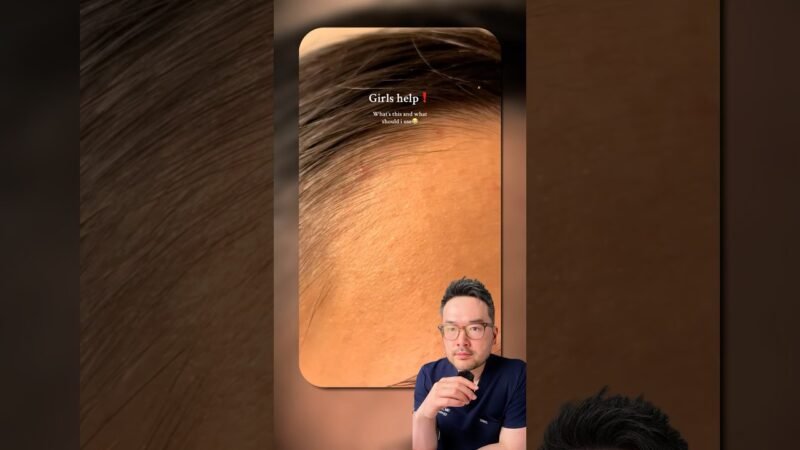
When you notice small, skin‑colored bumps on your forehead, it can be tempting to assume they are all the same issue. However, as the video explains, even though they may look similar, each type requires a distinct approach. Understanding the subtle differences is the first step toward effective treatment and preventing unnecessary frustration.
Fungal Acne: Itchy, Slightly Red Bumps
The video points out that if the bumps feel itchy and appear slightly red, fungal acne is a likely culprit. This condition is linked to yeast overgrowth on the skin. The suggested remedy is to use Nizoral shampoo as a facial cleanser, which contains an antifungal agent that can help reduce the yeast population. Alternatively, a prescription anti‑yeast cream from a healthcare provider can be considered. It is important to follow the directions provided with either option and to monitor the skin’s response.
Whiteheads: Bumps Accompanied by Blackheads
When the forehead bumps are accompanied by visible blackheads, the video indicates they are probably whiteheads. The recommended routine involves gentle exfoliation with salicylic acid applied twice a week. This helps to clear clogged pores without causing excessive irritation. On the remaining nights, a retinoid should be used three times per week to encourage cellular turnover and help prevent new whiteheads from forming. Consistency with this schedule is emphasized as a preventive measure.
Milia: Hard Bumps with a Small White Ball Under the Skin
If the bumps feel firm and you can sense a small white ball beneath the surface, the video identifies them as milia. These are described as tiny superficial cysts that should not be picked at home, as doing so can lead to irritation or infection. To help prevent milia, the video suggests incorporating a retinoid into your skincare regimen. If retinoids alone do not resolve the issue, seeking a professional extraction from a qualified dermatologist is advised.
Syringoma: Bumps on the Lower Eyelids
The video also mentions a distinct presentation: bumps that appear on the lower eyelids and have a particular look. In this case, the condition is likely syringoma, which are benign sweat duct tumors that have a genetic component. Because removal options are limited and may not be ideal even in a clinical setting, the video recommends discussing any desire for removal with a dermatologist. A professional can outline the available options and help set realistic expectations.
Putting It All Together: A Practical Approach
To summarize the guidance from the video, start by observing the texture and accompanying symptoms of the forehead bumps:
- Itchy and slightly red → consider fungal acne → try Nizoral shampoo as a face wash or obtain a prescription anti‑yeast cream.
- Presence of blackheads → likely whiteheads → use salicylic acid twice weekly, followed by retinoid three nights per week.
- Hard with a small white ball underneath → probable milia → avoid picking, use retinoids for prevention, pursue professional extraction if needed.
- Located on the lower eyelids with a specific appearance → possible syringoma → discuss removal options with a dermatologist.
Each pathway relies on the specific characteristics highlighted in the video. By matching your symptoms to the description, you can select the appropriate over‑the‑counter or prescription approach, or know when it is time to seek professional advice. The overarching message is that accurate identification leads to targeted treatment, reducing the risk of worsening the condition through incorrect self‑care.
Conclusion
The video provides a clear framework for distinguishing between several common types of skin bumps that can appear on the forehead or eyelids. It stresses that although they may look alike, fungal acne, whiteheads, milia, and syringoma each have distinct features and corresponding care strategies. Whether it involves using an antifungal shampoo, a salicylic acid and retinoid regimen, avoiding manual extraction of milia, or consulting a dermatologist about syringoma, the key is to observe the signs carefully and act accordingly. Following the video’s recommendations can help you manage these bumps effectively while minimizing unnecessary trial and error.